

Going to bed last night, my daughter explained to me that she is unique. She told me that no-one else is like her in the whole world, and that this makes her special. She’s 5.
Growing up, I remember how I would bump up against the grown up requirement to fit in. It was ok to be different, unless it was for something serious like an exam or a job interview. Then I’d shave a little off the unique shape of my character in order to fit.
I took a chisel to my idiosyncrasies so I could get good grades, or to get my first job. I’ve been filing away at the things that make me weird ever since - but it hasn’t really worked. I’m still different.
I am beginning to think it might be time to let the cat out of the bag. Maybe it’s time you did too?
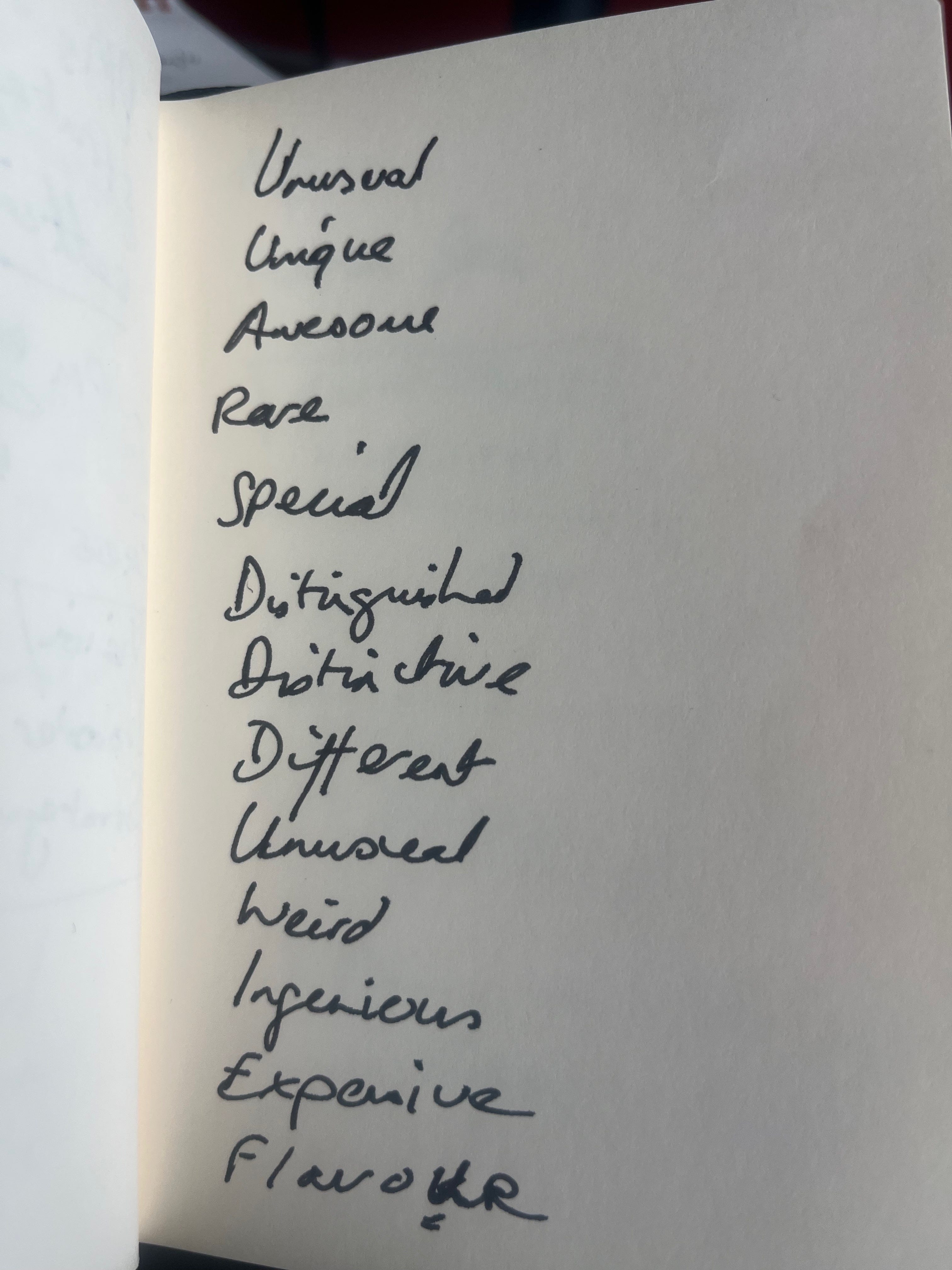
A.I. makes being different your most valuable asset.
A.I. has aggregated the world’s knowledge and allows that depth of data to be deployed in an instant.
Knowledge, and knowledge workers, are not as valuable in the context of A.I. as they used to be.
Anything that has ever been created before can be created again by A.I. with increasing speed over the next few years. It’s easy and fast to recreate a famous painting today. It won’t be perfect, but it’ll look the same, more or less.
Tomorrow, your business could be cloned in a few minutes.
Originality is now a premium resource.
Perhaps whatever makes us special should be something protected, organised and deployed carefully if we are to maintain our value in markets disrupted by A.I.
The closest thing to defining what makes you special in business terms is your USP (Unique Selling Proposition).
Who owns your USP? When was the last time you looked at it? Has it changed?
USP is often something we think about at the beginning of a business, and then it’s kind of an afterthought. We move on quickly to competitive marketing, where our established difference is pitted against others in our market to win customers.
For a lot of companies I’ve worked with, the USP is assumed. It’s such a vital and original piece of the company’s origin story that it’s kind of forgotten about, or written in stone. Everyone quotes the USP and puts in the pitch deck at sales meetings, but few question it.
The Annoying USP Question: Are you sure?
I always had the annoying habit of questioning a company’s USP. I wondered aloud whether it was correct. As you can imagine, this annoyed many’s a CEO who hired me to ‘do marketing’ for their company. I didn’t mean to be annoying. Sometimes it was worth a conversation. Often we were able to uncover new markets by questioning the fundamentals of what made us different, sometimes shifting to an entirely new market altogether as a result.
When you boot up any A.I. platform today, what’s the first question you’re asked?
After you’ve experimented with generic prompts, what’s the first thing you’re asked in order to tailor the experience and outputs to you, specifically?
Whether you’re using ChatGPT or an Enterprise platform like Intercom to run A.I. for your business, you’re inevitably asked some variation of the following during your onboarding:
“Tell us about your business. Tell us what makes it special. Tell us what makes your customers special”.
Your USP is the first step to using A.I., yet few of us think about it very much once the marketing team has done a workshop, or whatever.
Since it’s the very first step to everything else you do with A.I., your USP is the one thing guaranteed to help you establish a meaningful difference to what everyone else does with the same A.I…
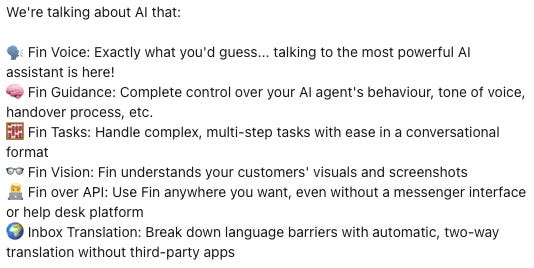
Look at the latest product releases from Intercom, for example. Building on top of their AI capabilities, Intercom are now racing to build new backend tools concerned with cornering, articulating and deploying the unique aspects of your business as you see them, so that FIN (Intercom’s A.I., built on Anthropic) understands how it might tailor responses and customer interactions to fit exactly to your unique business.
Standard vs. Unique: balancing the known against the unusual
Traditionally, businesses and individuals have relied on a mix of standard offerings with a touch of ‘uniqueness’ to sell product. Being distinct from the competition usually means having and promoting a minimal set of features, activities or attributes that are recognisably different, but not so different that you’re unrecognisable.
Same, same, but different.
What causes someone to buy is another story (see Jobs to Be Done theory on this subject).
Seth Godin defines a brand as a distinct promise that you’ve made to the buyer, that you’ve got to keep.
The value of a brand is:
“How much extra am I paying above the substitute? If I’m not paying extra, you don’t have a brand”.
Brand promise doesn’t just apply to companies or products. It can be equally important in how you sell yourself.
In job hunting, for example, candidates aim to meet standard expectations while showcasing unique skills. In his recent book “Job Moves”, Bob Moesta shows how "Jobs to be Done" theory helps candidates ‘hire their next job’ based on specific, unique criteria they deliberately assume before their search. With clarity, they are then able to identify standard requirements, match their unique attributes to suitable positions, and confidently identify and articulate where trade-offs can be made.
The Impact of AI on creative output
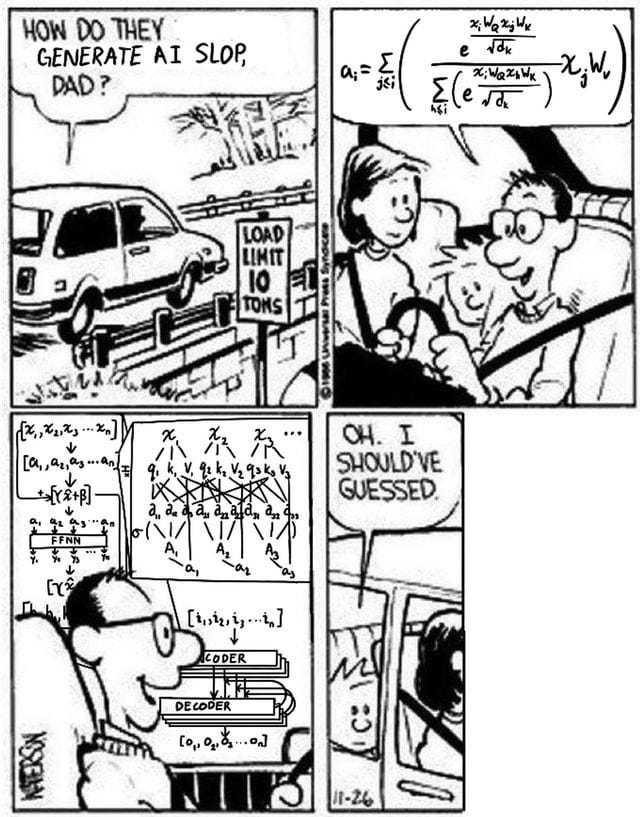
AI is amplifying the ability to meet standards at scale. This is also creating a phenomenon called "AI slop." Anything that can be done, will be done, at scale, with no end in sight. Especially memes.
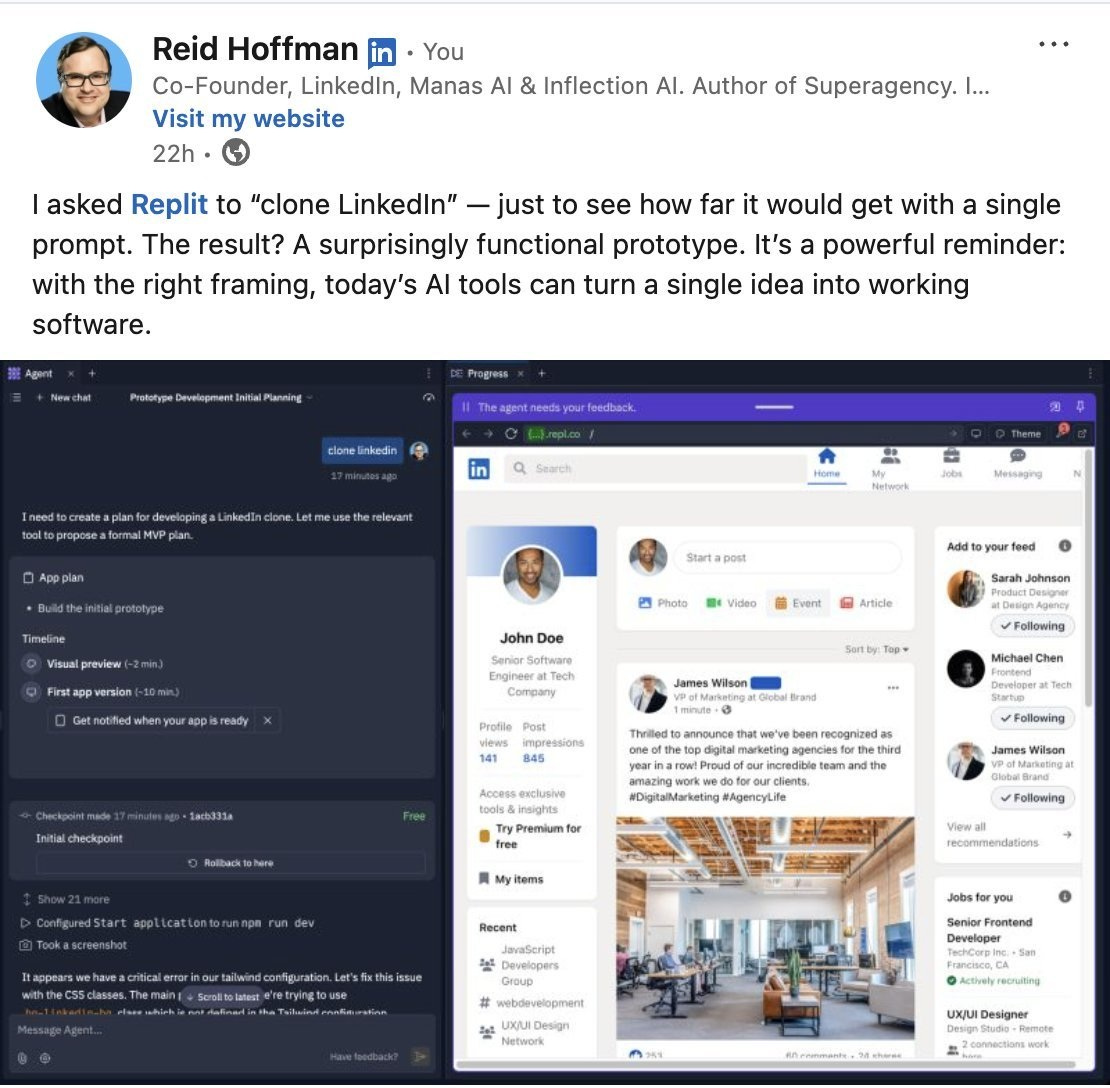
Reid Hoffman's experiment with AI cloning LinkedIn in 17 minutes highlights AI's capability to replicate standard configurations quickly.
As AI evolves, reproducing standard stuff will become easier, affecting job applications and product development. It’ll become more difficult to wade through the ‘amplified insanity’ as Bob Moesta calls it. This is already happening in the job market, where every job description and every resume is sliding slowly to the middle as they’re processed through A.I., so nobody knows anything about the candidates, and job seekers know nothing about the actual job they’re applying for.
As well as exponentially increasing the amount of stuff out there, A.I. will contribute to exponentially increasing the amount inaccuracies and waste already contained in most things that are standard today. There’s no limit to the sh1te that A.I. can drum up.
Anything that can be framed and pointed to as a standard worth copying for any reason can and will be cloned at some point.
The Importance of Uniqueness
In a world where AI can replicate standards, uniqueness becomes crucial for differentiation.
In light of the amplification of the standard by A.I. here are a couple of ideas for consideration:
Individuals and companies must articulate what makes them unique to stand out in the marketplace.
Uniqueness involves embracing personal history, creativity, and idiosyncrasies.
Let me know what you think…
Excellent observations! I advocate for journaling as the vital complement to AI, so that unmediated self-communication forms the bedrock of uniqueness. Excited to try your Bob Bot!