

I've noticed a fundamental constraint in Google Maps that's causing friction for millions of users, including me.
Even with unlimited resources, it’s still possible for any organisation to build and scale the wrong things if the underlying contradictions are not first addressed. Even at Google.
Contradictions are like two vectors in your business that cancel each other out
Contradictions are a really big problem in most businesses. Because businesses are systems, not automatic machines, there’s usually a few contradictions at play between departments, or between the business and their customers.
Sometimes, these contradictions are hard to spot, and everyone ignores them. We just kind of build around them, and on top of them. This creates a lot of internal friction, and poor customer experience.
AI make contradictions in your business worse by providing the means to scale the wrong things so there’s more friction, not less.
Most businesses I’ve worked with have one big thing holding back their growth. Everything else is noise.
If you can find your own internal contradiction, it can unlock growth better than any other initiative. That has been my experience.
If you want to grow your business, it’s a good idea to start by first looking for one constraint that once unlocked can accelerate growth and reduce costs.
This is most often in the form of a contradiction at the heart of every business.
The Fundamental Constraint
Most businesses are held back by one thing that creates friction everywhere else.
This constraint is usually based on an oversight.
The oversight stems from an assessment that comes from an insider's perspective.
It's a natural occurrence in many product-based organisations.
As an example, let’s talk about Google Maps.
You might think that one of the most intelligent organisations in the world might avoid the trap of internal contradiction.
Yet it’s often intelligence itself that blinds people pre-disposed to see the world a certain way.
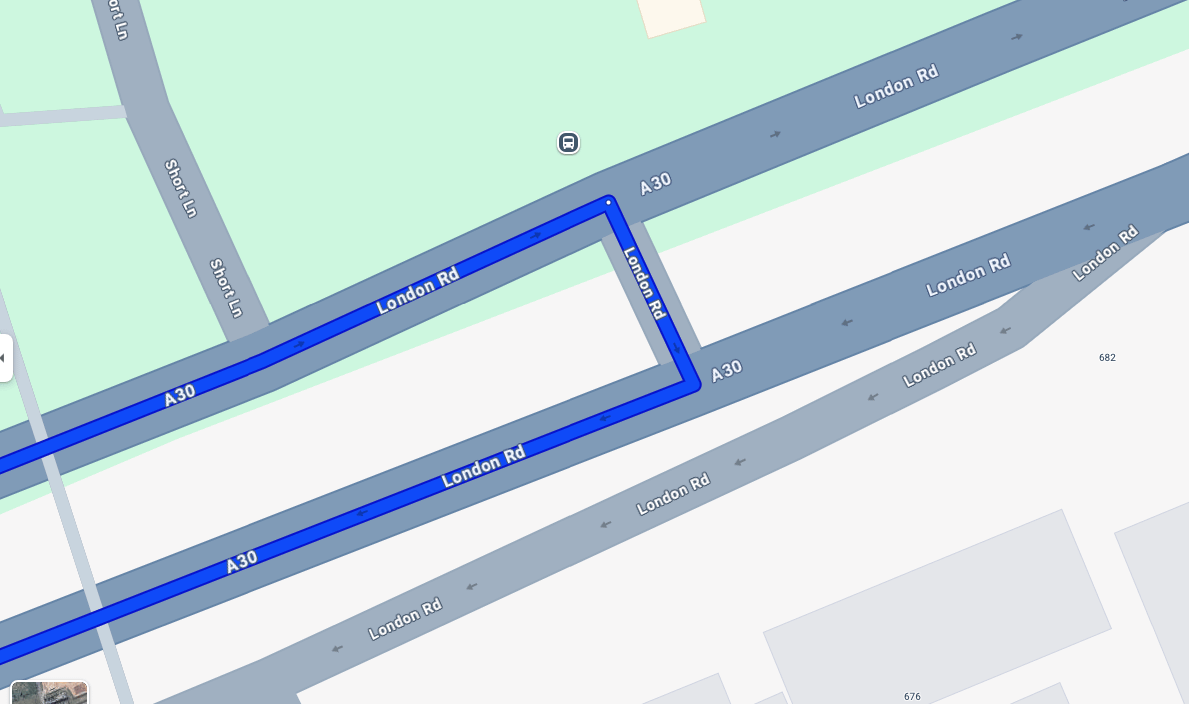
I have spent countless lost hours driving on Irish roads when I could have taken a more direct route, thanks to a fundamental constraint built into Google Maps.
The problem is a psychological one, not a technical one, so it never gets fixed. This glitch in the system costs Google Maps millions each year building and engineering around it.
Fixing it would mean diverting all those engineers to a task that’s only relevant to weird European outlier cases - and at the end of the day, that’s not important enough.
Can you guess what the constraint in Google Maps is?
The one constraint: Google Maps thinks every city is like an American city, and every road has a backup road.
In the USA, many cities were built from scratch on a grid system because there was little existing infrastructure a few hundred years ago.
In Europe, including Ireland, streets are often built on top of ancient roads and paths, resulting in a non-grid layout.
If you’ve ever tried to follow Google Maps around Ireland, you’ll know all too well how this becomes a problem.
Google Maps really doesn’t like U-Turns.
I ran a deep research report in Claude.ai to validate my assumptions. Turns out, I’m not the only one Google Maps is sending all over the country:
The research:
Google Maps performs worse in European cities with medieval street layouts. The data shows measurable differences:
Grid cities have 41-43% route efficiency vs higher inefficiency in organic cities
European users consistently report needing workarounds and backup navigation
Academic studies confirm grid cities offer 13x more routing predictability
According to my AI research report: “The real constraint isn't algorithmic bias - it's algorithmic-topology mismatch.”
“Google's priorities (traffic optimisation, road hierarchy, legal compliance) work brilliantly when applied to predictable grid networks with parallel routes and clear hierarchies. Apply those same priorities to organic European cities with medieval layouts, limited parallel options, and complex legal restrictions, and you get the exact frustrations you experience.”
Google Maps will divert you miles out of your way to find a road that doubles back onto itself.
It’ll also send you on a road across the top of a mountain on the way to County Clare because the road it favours is technically listed as a national road.
If you were a local giving directions, you’d know that the road Google Maps just recommended hasn’t been used in 50 years, except by bandits and lost Americans.
Welcome to Ireland, watch out for the sheep…

In the USA, if you miss your turn, there's usually another street that goes the same direction - like having multiple paths through a neighbourhood. So Google Map's ‘brain’ says "no problem, just take the next street over."
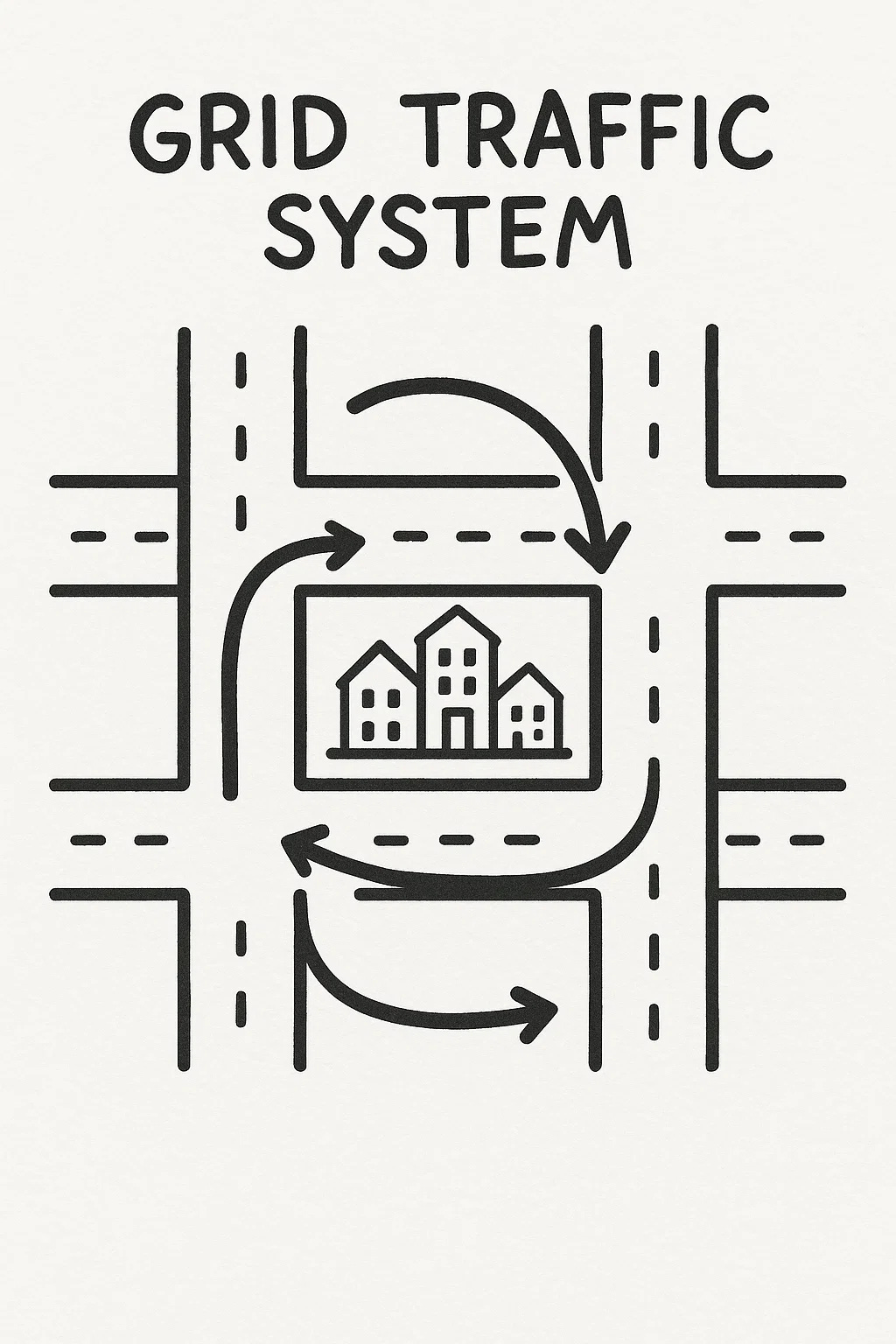
What happens if you’re on a road in Ireland where there is no grid, just a straight road for 10 miles until the next turn off? And another 5 mile road before you have an opportunity to point your car back in the direction you want to go…?
In this case, you stop, switch off Google Maps, swing your car around in the opposite direction, then switch Google Maps back on. That’s how I do it anyway.
The constraint isn't about grids - it's that Google assumes you always have choices when sometimes you don't.
The Real Constraint: Optimisation vs. Innovation
Google Maps doesn't assume grids exist - that would be stupid.
It’s a bit more complicated than that - it assumes grid-like benefits exist everywhere.
They’ve considered the trade-offs, and have decided that as long as roads are ‘mostly’ grid-like, then designed for that.
Google Maps algorithms optimise for multiple parallel routes, predictable road hierarchies, and standardised intersections. These assumptions work brilliantly in planned cities but break down in organic ones.
Like Irish roads covered in sheep poo 💩.
Many businesses do something similar - they apply their view of the world to their customer experience, and assume they’re the same thing.
Optimisation isn’t the same as Innovation.
Innovation is Disruptive.
Google Maps would need Innovation to fix the problem caused by their internal contradiction.
But they’re focused on Optimisation, so I keep getting sent down windy roads when I’m trying to find the train station at Ballybrophy.
Insider Blindness
I’m not a road designer, nor do I know what the technical term is for someone like that.
But I’m guessing the problem is the people, not the system.
My theory: Google's engineers solved navigation for the world they know - Mountain View, Seattle, Phoenix.
Cities with:
Multiple route options for every journey
Clear arterial → collector → local road hierarchies
Intersections that follow patterns
Legal frameworks designed around car infrastructure
They built a universal solution for a non-universal problem.
Why This Matters More Than Grid Bias
Google didn't just miss European street layouts - they’ve missed that navigation itself works differently when:
There's often only one viable route between points
"Main roads" might be 800-year-old cart paths
Legal restrictions change by medieval city quarter
Road hierarchies follow historical accident, not planning logic
Desire paths on Irish roads are fun for some trips, but not great when you’re in a rush…
The Real Story of Google Maps
Google Maps works perfectly - if you live in a world designed like Silicon Valley. For the billions who don't, every journey becomes a negotiation between an algorithm optimised for choices you don't have and infrastructure that follows logic you can't code.
Google AdWords circa 2013.
This isn’t the first time Google let an insular perspective create friction in their business.
When I was engaged as a consultant to look at content delivery systems for Google AdWords globally over 10 years ago.
Email marketing campaigns involving over 60 million AdWords customers were getting all jammed up because the content producers couldn’t get their copywriting and design approved.
The backlog was reaching critical levels.
In this case, the answer to unlocking growth lay in a contradiction; one contained in brief conversation I had with the (tiny) Google AdWords marketing team in Mountainview.
It was so subtle I almost missed it.
I was talking to the smartest people in the room, and they just couldn’t understand why nobody else could understand how to write as well as they did…
‘Good question’, I thought.
I played the conversation back in my head on the plane on the way home. Over and over.
Suddenly it struck me.
The answer was in a contradiction.
Nobody could write like they did because they weren’t them.
Google was paying millions of dollars to people all over the world to write copy for marketing emails sent out to over 66 million AdWords customers.
All the copy kept bouncing back when Google leadership got it and rejected it.
Why? Nobody knew.
Even the people rejecting the marketing copy didn’t know why it was bad. They just knew it was ‘bad’. Not why.
The solution was sitting right in front of them. I saw it because I grew up in Tipperary, not California.
The one constraint holding back their growth and costing them millions in failed iterations and content cycles seemed obvious in hindsight.
Here’s what I figured out. If you want your marketing copy to get past the gatekeepers at Mountainview, pretend you went to Stanford.
That’s it.
When I returned and wrote copywriting and design briefs with this as the heading, everything flowed:
“Write it/Design it as though you went to Stanford.”
Google AdWords email copy sounded like a Stanford graduate: Clever, clipped, smart, funny and insightful.
This one insight unlocked a flood of marketing communications and saved a fortune.
It was a people problem more than a systems problem.
It was a core contradiction holding everything back.
Why does this matter for your business?
Chances are you’ve got a similar ‘built in’ constraint that is inhibiting your growth, and you’re probably too close to see it.
Below are some examples from my own work with clients over the past couple of years where it helped to identify a core constraint before building systems to grow their businesses.
Find The One Big Constraint: Opposing Vectors Creating Stasis
Offshoring consultancy firm
The ONE constraint: They were running a high-volume SaaS outbound model (think BDR/sales reps making lots of cold calls) AND a high-touch consultancy sales process simultaneously - each system undermines the other's success metrics, creating paralysis.
Key to growth: We unlocked growth by decoupling their opposing sales motions, initially pitting them independently against each other to see which won (to satisfy internal skepticism), and then doubling down on the one with highest potential for growth.
Result: 2x revenue growth.
ECommerce brand
The ONE constraint: They were using marketing automation and ads that generated leads at scale (“too many leads”!) - AND a sales process requiring personal phone calls for every transaction. The better marketing performed, the worse operations failed. Customers were waiting, left unattended, thousands of euro left on the table every month…
Key to growth: We built an AI powered system that handled personal responses required for ‘5 minute response times’, created another AI system that bubbled up the most valuable leads as they came in so the sales team knew who to call and when, and allowed the longer tail of delivery and fitting to be handled on the other side of sales.
Result: successful exit for founder, 2x increase in revenue over 3 months.
Accounting Tech Startup
The ONE constraint: An early stage founder designed a billing model that rewards hours spent AND the business goal of automation/efficiency - resulting in a business model contradiction that incentivised customers to reduce their spend and for every improvement in efficiency to directly reduce revenue.
Solution: When we identified the constraint, we were able to prototype parallel go to market strategies for each business model to see which had the most potential for growth.
Result: 2x increase in customer acquisition, funding secured.
Leadership & Executive Coaching
The ONE constraint: Thought they needed more leads to grow the business, and were spending too much on marketing and content.
Solution: opposing business models, with an app on one side of the divide and premium leadership coaching for C-Suite executives on the other, were cancelling each other out. We focused the go to market strategy on high quality leads from peer groups and considered outreach.
Results: doubling retention rates, saving 70% on costs, and building a complete business transformation to a better business overall.
My own Journey Mapper/Intercom Business
The One Constraint: We started out selling Intercom’s self-service AI tools to support managers AND trying to help those managers' need to protect their own teams/budgets - in effect we were asking them to automate away their own importance.
Solution: for me, this meant a frank admission to myself of a fundamental constraint affecting growth for any professional services on top of AI - this is about Digital Transformation, not selling product. The only way to do it is top down, with a consultancy business model.
Result: I realised this one constraint was too big to climb over - and pivoted back to my own successful HubSpot agency, Mount Arbor. Meanwhile, Julian, my co-founder, found a way to prepare businesses for their next step towards AI by partnering with a leading diagnostic platform, Hubbl, and continues to grow the business in that direction.
Mount Arbor (My Current Challenge)
The One Constraint: I was building intellectual property for scalable products AND selling time for custom implementations - every client project prevented product development, every product push starved cash flow.
The Solution: I realised I was trying to create systems as a moat between me and my clients, rather than leaning into helping them make progress. I decided to meet demand where it’s at, and re-establish my business as a leading HubSpot Agency and expert in AI.
Results: Watch this space.
Some more examples:
WeSwitchU (energy cost saver business):
The One Constraint: Premium service provider positioning AND commodity price comparison platform - customers expect concierge service but shop purely on price.
The Solution: we reformatted their internal HubSpot systems to eliminate the noise and streamline ‘cost to serve’ - a key metric in a commoditised market.
Result: significant cost reduction and profitability increase, better systems to scale.
IT Services Firm (€150M revenue, sold for est.€100M last year)
The One Constraint: This company was perceived in Ireland as a reliable/safe government contractor brand AND wanted to be seen as an innovative/transformative service for private companies - low risk AND high risk. The very attributes that win public contracts repel private sector buyers.
The solution: We were able to show the boardroom team and management where the internal contradiction was causing friction and failed marketing efforts.
Results: We helped to clarified the thinking and strategy around the core constraints affecting strategy and marketing overall. The CEO’s summary of our findings says it all: “F*ck ya! You’re right! How did we not see it?!”. He realised that spending more wasn’t going to solve the underlying problem - resulting in the subsequent acquisition of this company for a reported 100 million euro.
Uncover your own Business Constraint
If you need a little help digging into your business to find any internal contradictions you may not see but might be costing you growth, feel free to reach out. It might help to have an outside perspective!
https://www.mountarbor.io/